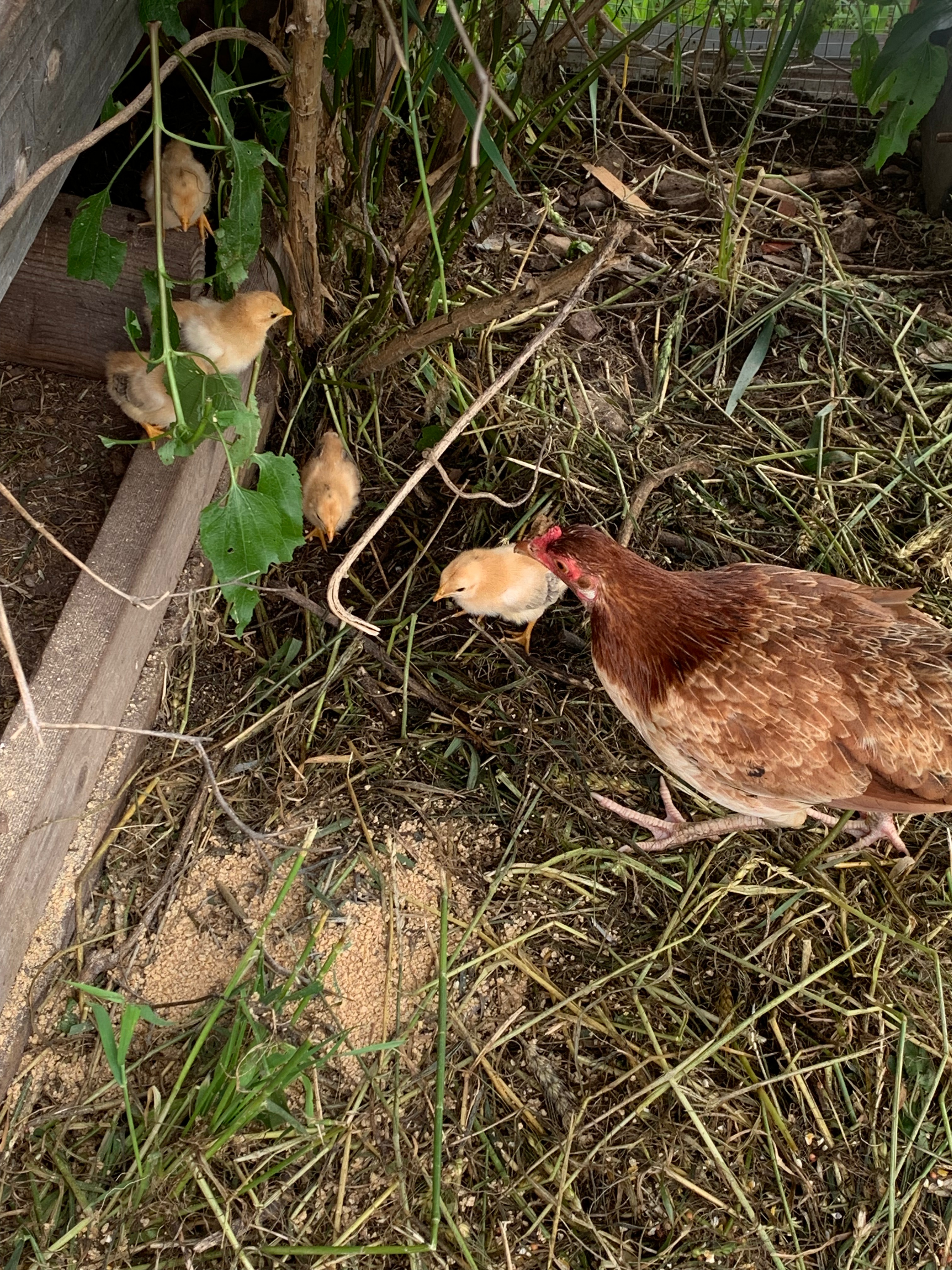


My knowledge of chickens was zilch when I strolled home with my first batch of baby fluffballs. In fact, I just discovered that a group of chicks is officially called a “clutch” and not a “baby flock”—who knew? At this point, Google must have me flagged as that “crazy chicken lady” insistent in asking the most ridiculous questions imaginable. Don’t worry, if it’s out there, I’ve probably pondered it, googled it, spiraled down a few rabbit holes, and come up with my own theories on the matter.
My first batch of chicks turned out to be a small clutch of Bantams—tiny but mighty! While my husband scratched his head over the pint-sized chickens and the even smaller eggs they laid, I was over the moon just to have kept them alive long enough to reach adulthood! They turned my backyard into a comedy show; these little feathered dynamos refuse to let their small size hold them back. It’s like they all had a case of “small man syndrome”—I can say that since I barely surpassed the child car seat height requirement by 3 inches!

Once I became more serious about utilizing the homestead for a source of food and not a source of entertainment, I excitedly introduced a few different FULL SIZE breeds to my flock. While my Bantams were initially hesitant about this decision, they learned to adapt and settled in after a few days. Introducing new chickens to the flock can be quite the experience! We gradually implement this process by placing the new chickens in the coop in their own enclosed space where they can see each other, but cannot physically interact (or fight) for a few days. Over the years, we’ve introduced an eclectic array of breeds including Game Chickens, Black Orpingtons, Sapphire Gems, Plymouth Rock, Easter Egger (a hybrid of Plymouth Rock and Araucana, lays blue/green eggs!), Rhode Island Red, and Cinnamon Queen (a hybrid of Rhode Island Red and Rhode Island White). Each breed offers its unique advantages and disadvantages in my opinion, making the experience all the more enriching.

A couple of years back, my flock was diminishing faster than my sanity on Monday mornings, largely due to a range of wild critters. One of these “wild critters” was an owl that somehow found its way into the chicken coop! Early one morning, I opened the gate, and thought to myself, “man, that’s a questionable-looking chicken.” As you can see from the photo, that rascal was clearly not a chicken at all. Owning chickens is definitely not for the faint of heart – just my two cents on that subject. You will most assuredly encounter some crazy things in the course of this adventure!

My husband’s hunting dogs have also thinned the flock when they weasel their way off the chain like furry “Houdinis”. Feeling a smidgen guilty, my husband decided to “surprise” me with some Game Hens. The excitement quickly turned to horror when they attempted to unalive each other on the way home. One of them, who we dubbed Rhonda after Ms. Rousey, was a feathered force of nature who simply loved to fight. These hens were so mean, they would make a drill sergeant cry! They are definitely the smartest chickens I’ve had with incredible maternal instincts. HOWEVER, unless you’re a fan of high-stakes Chicken Drama and love to play referee, I don’t really encourage people (especially beginners) to bring home Game Chickens.

My favorite breed thus far is definitely the Sapphire Gem! Their coloring is absolutely stunning, they are wonderfully docile, and they lay just enough eggs to share some with family! I may not have a quota, but if I did, they would exceed my expectations. Coming in a close second would be my Cinnamon Queens – they are fantastic Mommas, laying plenty of eggs without being overly broody. Scooting into the third favorite is the Black Orpington who also makes a great Momma, a bit broody but very reliable when it comes to laying a good number of eggs. If you do decide to keep a rooster or two with your flock, the Black Orpington Roosters seem to do a decent job protecting the hens and aren’t aggressive at all toward children (mine is docile even when provoked by rugrats). I’ll drop a list below that compiles some of the breeds which seem to be beginner friendly and what strengths they demonstrate.
